 Admin Admin
Infrared And Bluetooth

With new electrical devices being produced on a daily basis, the problem of connecting things is becoming increasingly complex. A variety of wires, cables, and other components are used in the system that includes computers and other electronics.
Light beams, lasers, radio signals, and infrared will be used to communicate between these components. The issue is that devices and technology are frequently used to connect each component. As a result of the problems and imperfections, most electronic systems are not used to their full potential.
READ MORE: 3 Why did humans begin to eat meat?
A solution, Bluetooth, was developed to help simplify things. Bluetooth is a wireless and automatic technology that provides users with a variety of features that have simplified the art of connection. Bluetooth has transformed traditional methods of connecting things, allowing almost anything to be connected to a single system.
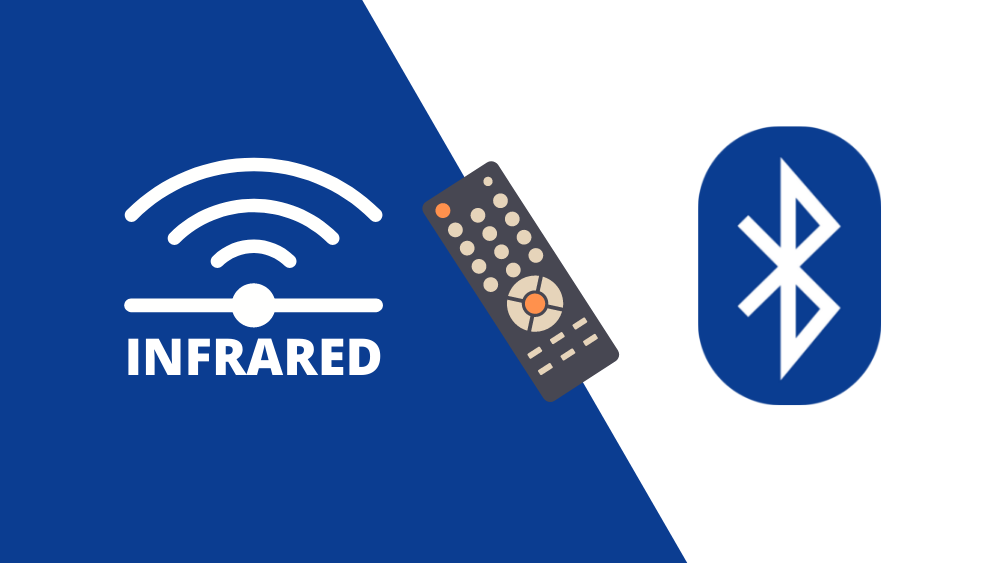
Other than Bluetooth, there are other methods for connecting wireless devices. The IR, or infrared, is one such example. Low frequency light waves can transmit signals to another component using infrared.
This technology is simple to develop, and the cost of integrating an IR device into a system is relatively low.
Infrared technology works on a one-to-one basis. Because of the restriction, you can only send signals from one device to another, such as a television set and remote control. Signals can only be transmitted between the two, but not with a separate system.
Aside from the fact that these two properties of infrared are obstacles to obtaining results, these same characteristics have worked in favor of the connection. Infrared devices must be directly lined up, which means that interference between transmitters and receivers is minimal.
Bluetooth technology works by transmitting signals via low frequency radio signals. The communication path operates at 2.45 GHz, the same frequency band as ISM devices.


 Admin Admin