 Admin Admin
New salary structure takes effect in September as government moves to improve military welfare and strengthen Nigeria’s response to insurgency, banditry and kidnappings.
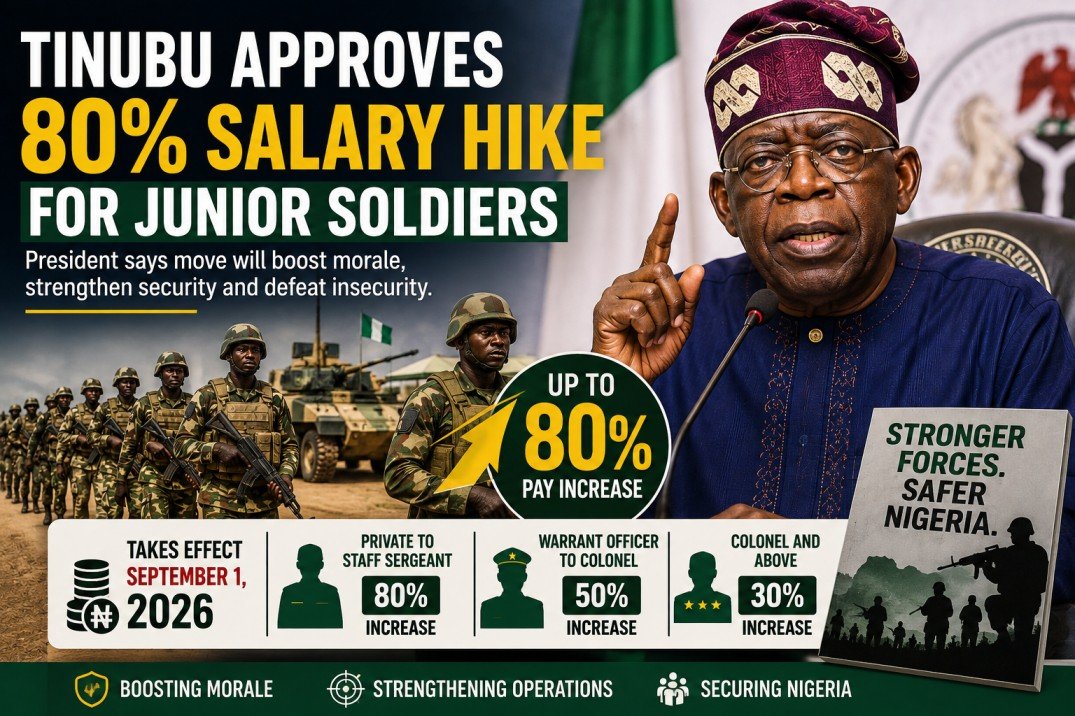
ABUJA — President Bola Ahmed Tinubu has approved a major salary increase for members of Nigeria’s Armed Forces, with personnel in the lower ranks receiving up to an 80 per cent pay rise as the government intensifies efforts to tackle the country’s security challenges.
The new salary structure will take effect from September 1, 2026, according to the Presidency. Under the arrangement, soldiers from the rank of private to staff sergeant will receive an 80 per cent increase. Personnel from warrant officer to colonel will receive a 50 per cent increase, while officers above the rank of colonel, including generals, will receive a 30 per cent increase.
The decision comes as Nigerian security forces continue to confront several threats, including insurgency in the Northeast, banditry and kidnappings in parts of the North and other forms of violent crime across the country.
The government says improving the welfare of military personnel is an important part of strengthening national security. President Tinubu has repeatedly emphasised the need to support troops serving in difficult and dangerous environments.
The latest salary increase will also significantly increase the military’s annual wage bill, from about ₦660 billion to ₦924 billion, according to information released following the announcement.
The pay rise is part of a broader effort by the administration to improve military welfare and operational readiness. Earlier this year, the President also announced a dedicated welfare fund to support wounded service members and families of personnel who die in service.
The administration has additionally been investing in military equipment, intelligence, technology and personnel expansion. In July, Tinubu approved the creation of four additional Army divisions and the recruitment of 28,000 personnel, taking the planned Army structure from eight to 12 divisions.
Despite these measures, insecurity remains a major challenge for Nigeria, with communities continuing to face threats from armed groups and criminal networks.
The salary increase is therefore being viewed as an attempt to boost the morale of personnel while giving greater attention to the welfare of those serving on the frontline.
For the Tinubu administration, however, the bigger test will be whether improved welfare and increased security spending can translate into greater safety for Nigerians and a sustained reduction in violence.
The government has promised to continue modernising the Armed Forces and improving their capacity as it works toward a safer Nigeria.


 Admin Admin